



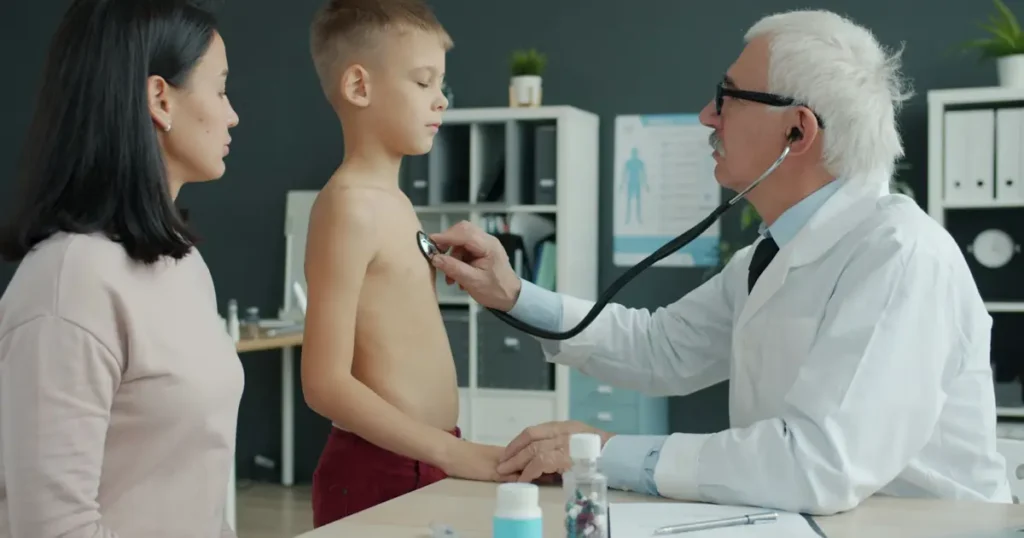
Knowing how to prepare for a sports physical makes the visit faster, more thorough and less stressful for everyone. The short version: fill out your school’s physical form ahead of time, gather your child’s health and family history, bring a list of medications and your insurance card, and schedule the visit a few weeks before tryouts. This guide walks through each step, so your athlete is cleared and ready when the season starts.
Whether your child is heading into winter basketball, wrestling, swimming or a ski team, the same preparation applies.
What is a sports physical?
A sports physical, also called a pre-participation physical evaluation, checks whether it’s safe for a child to play a particular sport. The doctor reviews health history, checks vital signs and vision, listens to the heart and lungs, and looks at joints, strength and flexibility. The goal is to catch anything that could put an athlete at risk before the season begins.
A sports physical is not about keeping kids off the field. In most cases, the visit ends with a signed form and a few tips for staying healthy during the season. When something does come up, like a heart murmur, past concussion or old injury, the physical gives the family time to address it before practice starts.
When should I schedule a sports physical?
Schedule the physical two to four weeks before tryouts or the first practice. That leaves time to fill out forms, follow up on anything the doctor finds, and turn the signed form in before the deadline. Waiting until the week of tryouts is the most common reason athletes miss the first practice.
In Utah, timing also matters for the school year. The UHSAA Pre-Participation Health Examination Form states that a health exam must be performed annually, completed every school year, and not done before March 10 of the previous school year. That means a physical done in spring, after March 10, can count for the following fall. Families who plan ahead can skip the late-summer rush.
What should I bring to a sports physical?
Bring anything the doctor needs to complete the exam and sign the form. A little preparation at home turns a rushed visit into a thorough one. Use this checklist:
- The school’s physical form, with the parent and athlete sections filled out and signed. Utah high schools use the UHSAA form. Middle schools and club teams may have their own.
- Your insurance card, so the office can confirm coverage.
- A list of current medications, including inhalers, allergy medicines, EpiPens and supplements.
- Glasses or contacts, since the exam includes a vision check.
- Vaccination records, if your child is new to the practice.
- Notes on past injuries, including sprains, fractures, concussions and surgeries.
- Your family’s heart health history (more on this below).
Have your child wear comfortable clothes that make it easy to check joints and posture, such as shorts and a T-shirt.
Which health history questions matter most?
The health history is the most important part of a sports physical. Many serious problems show up in the questions before they show up in the exam. Take time at home to answer the form’s questions carefully, with your child, and be honest about anything that has happened, even if it seemed minor.
Pay extra attention to questions about:
- Fainting or near-fainting, especially during or right after exercise.
- Chest pain, a racing heart or unusual shortness of breath during activity.
- Concussions or head injuries, including how long symptoms lasted.
- Family heart history, such as a relative who died suddenly at a young age, or who has a known heart condition.
- Asthma, allergies and other chronic conditions, and whether they’re well controlled.
- Past injuries that still cause pain or limit movement.
If you’re unsure about a family member’s history, ask relatives before the visit. These questions help the doctor decide whether an athlete needs any extra testing before playing.
What happens during the exam?
The exam usually takes 15 to 30 minutes. The doctor checks height, weight, blood pressure and pulse, tests vision, and listens to the heart and lungs. They also look at the spine, joints, strength and flexibility, and ask about past injuries. If everything looks good, the doctor signs the form the same day.
Here’s what’s typically checked:
| Part of the exam | What the doctor looks for |
|---|---|
| Height, weight, blood pressure | Healthy growth and blood pressure for age |
| Vision | Whether glasses or contacts are needed for safe play |
| Heart and lungs | Murmurs, irregular rhythms or breathing concerns |
| Joints, muscles and spine | Old injuries, flexibility, strength and posture |
| Neurological check | Balance and any lingering concussion symptoms |
If the doctor finds something that needs a closer look, they’ll explain next steps. Most concerns can be addressed with a follow-up visit, a referral or a plan to manage a condition during the season.
Should the sports physical be done with a regular checkup?
Yes, when possible. The American Academy of Pediatrics recommends scheduling the sports physical with your child’s next routine well-child visit. Your child’s own pediatrician already knows their history. A full checkup also covers things a sports physical alone doesn’t, like vaccines, development and emotional health.
The AAP also cautions against quick, mass physicals in school gyms or other settings where the examiner doesn’t know the child. A pediatrician who has seen your child over time is more likely to notice changes and can keep all of their health records in one place. Learn more about well-child visits and how they fit with sports physicals.
Can my child get a sports physical without an appointment?
Yes. Heber Valley Pediatrics offers sports physicals during walk-in hours, Monday through Thursday, 4 to 6 PM, excluding holidays. No appointment is needed, and your child doesn’t need to be an established patient. Bring the completed form so it can be signed during the visit.
Walk-in hours can be busiest in late summer and right before winter tryouts. If you’d like a set time, or want to combine the physical with a full checkup, schedule an appointment instead. You can learn more about our sports physicals, and families using the Utah high school form may find our guide to the UHSAA physical form and deadlines helpful.
How can athletes stay healthy after the physical?
A signed form is the start of a healthy season, not the finish line. Encourage your athlete to warm up before every practice, drink water, get enough sleep and speak up about pain instead of playing through it. Rest days matter as much as practice days for growing bodies.
If an injury does happen, know where to go. For more ideas on staying safe, read our tips on sports injury prevention for active kids.
Getting ready for the season?
Heber Valley Pediatrics offers sports and school physicals by appointment and during walk-in hours, Monday through Thursday, 4 to 6 PM. Our pediatricians, including Dr. Dave Larson, Dr. Reagan Larsen and Dr. Holly Richter, are happy to help your athlete get cleared to play.